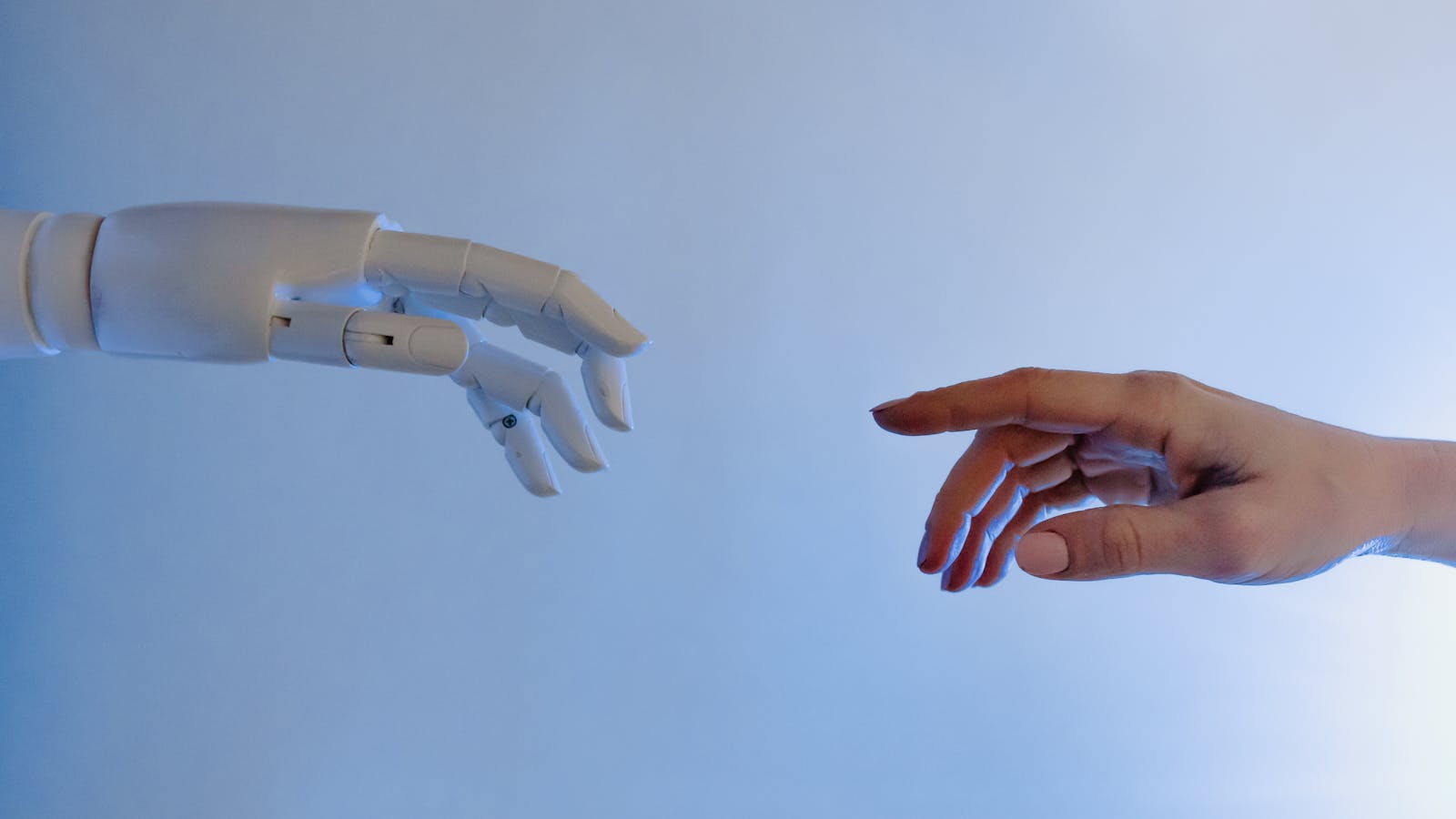
AI Left the Copilot Era This Morning
OpenAI's mathematics breakthrough is not just another lab demo. It marks the moment AI stopped looking like a productivity layer and started looking like a research actor.
Published 22 May 2026
The loudest serious conversation on X this morning was not about an app launch, a benchmark screenshot, or another founder posting a cinematic thread about agents replacing interns.
It was about a proof.
OpenAI spent the last few hours pushing a claim that would have sounded ridiculous even six months ago: one of its general-purpose reasoning models produced a valid breakthrough on an 80-year-old problem in discrete geometry, the planar unit distance problem first posed by Paul Erdős in 1946. The claim was not merely that the model helped. The claim was that it autonomously found a genuinely new route, one strong enough that external mathematicians checked it, wrote a companion paper around it, and described it as a milestone.
That is why this topic beat the usual AI noise on X. Serious people immediately understood the implication.
If the claim holds up, the story is not "AI gets better at maths."
The story is that AI is now crossing a line from assistant to contributor.
That line matters more than almost any product release.
The theorem itself matters. For decades, mathematicians believed the best constructions for maximising unit distances in the plane were essentially variations on a square-grid idea. OpenAI says its model disproved that consensus by finding an infinite family of constructions that does better, using ideas from algebraic number theory that most people would never have connected to this problem.
If you are a mathematician, that is already a big deal.
If you are an operator, it is a much bigger deal than that.
Because the actual commercial implication is not about geometry. It is about what kind of work AI can now plausibly do.
For the last two years, most business use of AI has sat inside one of three buckets:
Write faster.
Code faster.
Search, summarise, and automate the admin sludge.
Useful? Absolutely. Transformational? Sometimes. But still basically assistant-shaped.
This morning's argument on X was about something else entirely: whether frontier models are beginning to do original cognitive labour in domains where correctness matters, prestige matters, and bluff gets punished.
That is a different category.
A model that helps you draft a marketing email is nice. A model that helps your scientists think is strategic force. A model that produces a novel proof that external experts take seriously is not "copilot". It is proto-colleague territory.
Not human replacement. Not yet. But not just software either.
A lot of executives are still operating with a 2024 mental model of AI.
That model says: AI is excellent at first drafts, mediocre at truth, and dangerous anywhere precision matters.
That model is getting stale fast.
To be clear, most AI output is still mush. Plenty of agent demos still collapse the moment they hit ambiguity, long-horizon tasks, or a hostile environment. And the industry is absolutely addicted to claiming that "this changes everything" every time a model learns a new parlour trick.
So some scepticism is healthy.
But the shape of the scepticism now needs to change.
The lazy critique has been: "These models just remix the internet." That was always too simple. It is now becoming evasive. Because when a system produces a line of reasoning that domain experts judge new, elegant, and publishable, the relevant question is no longer whether it read a lot. Of course it read a lot. So did every good researcher. The relevant question is whether it can combine, persist, test, and discover at a level that creates net new knowledge.
That is the line being contested today.
And the fact that the contest is now happening in public, on X, around a serious maths result rather than a toy benchmark, tells you the market has moved.
Most companies will misread this moment in one of two ways.
The first group will wave it away because "we are not doing discrete geometry". Fair enough. Neither are most people at Shopify, Stripe, or your local PE-backed manufacturer.
The second group will overreact and decide the answer is to plaster "AI research" across their roadmap.
Both are lazy.
The right reading is narrower and more useful: if frontier models are becoming capable of sustained, novel reasoning in constrained domains, then every knowledge-heavy function is now on borrowed assumptions.
Not dead. Not gone. Just newly contestable.
Think about where your business depends on humans doing expensive, high-context, non-routine thinking:
pricing strategy
supply chain optimisation
legal interpretation
scientific R&D
financial structuring
fraud analysis
diagnostics
demand forecasting
growth experimentation
negotiation prep
product discovery
The question is no longer whether AI can support those workflows. That argument is finished. The new question is where it starts producing insight rather than merely compressing labour.
That distinction is brutal.
If your internal AI plan is still "give everyone a chatbot and call it transformation", you are preparing for the last war.
The most important sentence in OpenAI's write-up was easy to miss: they say the proof came from a general-purpose reasoning model, not a system trained specifically for maths or scaffolded for a bespoke proof search.
If that holds, it matters because it changes the economics of capability distribution.
Specialised systems are impressive, but limited. They tell you one niche is moving.
General-purpose systems that start breaking into frontier work tell you many niches are about to move at once.
That is what makes this uncomfortable for incumbents. If a model can reason well enough to produce original work in one hard domain, you do not need perfect transfer to every other domain for the economics to bite. You just need enough transfer to make a surprising number of expensive human tasks partially contestable.
That means the next wave of advantage will not come from using AI to save 20 minutes here and there. It will come from organisations that redesign around machine-generated hypotheses, machine-patience, and machine-scale exploration.
Humans are still in the loop. OpenAI's own supporting material makes that clear. External mathematicians checked, contextualised, and improved the result. One of the fairest points in the surrounding coverage is that the broader problem is not "solved" in the grand, final sense. The model disproved a famous conjecture; it did not close the field.
But that is almost the point.
The machine did not have to finish the whole discipline to move the frontier.
It just had to contribute something serious enough that the frontier moved.
The obvious reaction to this story is to imagine elite science being transformed first.
Maybe. But the more immediate commercial impact may hit much less glamorous work.
Why? Because frontier science has high verification standards, scarce problems, and a culture that expects novelty. It will adopt carefully.
Mid-tier knowledge work is where the damage arrives sooner.
Think analysts, operators, agency strategists, consultants, finance teams, procurement teams, growth teams, internal legal operations, technical PMs. Not because those roles are trivial, but because they are full of bounded reasoning tasks where a model that can persist, test alternatives, and surface a non-obvious path may already be good enough to change staffing ratios.
That is the part people keep missing. The value of a research-capable model is not confined to Nobel-bait problems. It trickles down into every domain where the bottleneck is not typing speed but thought quality under time pressure.
The machine's superpower is not genius. It is relentless cognition without boredom.
That is more than enough to reshape a lot of businesses.
The mistake is to think this only matters when the model can run the whole job end to end. That is not how most economic displacement begins. It begins when one expensive slice of a role stops requiring the same amount of human time. A senior person still owns the judgement, but the first-pass search, comparison, synthesis, objection handling, and option generation start arriving from software. The job is still there. The unit of work has changed.
That is why this proof story is so awkward for professional services. Consulting, research, strategy, growth, finance, and legal operations are not paid only for answers. They are paid for structured thought under uncertainty. If AI can produce credible candidate reasoning in domains where experts can inspect the output, the scarce resource moves from production to evaluation. That makes some teams dramatically faster. It also exposes teams whose value was mostly the ability to spend more hours thinking than the client could.
This is also where smaller companies may get a strange advantage. Large organisations will turn this into governance theatre first. Committees, frameworks, steering groups, acceptable-use policies, platform decisions, procurement cycles. Some of that is necessary. Much of it will be institutional delay wearing a sensible jacket. Smaller operators can move differently. They can pick three painful reasoning loops, put AI into the first pass, keep a strong human reviewer, and measure whether the decisions get better.
The uncomfortable part is that better decisions compound. A model that improves one pricing call is useful. A model that helps a team run 50 better pricing, product, hiring, support, or campaign decisions in a quarter starts changing the shape of the company. Not because the AI is magic. Because the business has increased the number of serious options it can consider before time runs out.
There is still a serious sceptical position here, and it should be heard.
OpenAI has history. Last year's Erdős-related claims triggered criticism because some "discoveries" were already in the literature. This time, the company appears to have come prepared: external mathematicians checked the proof, a companion paper was produced, and even sceptical observers seem to be treating this as qualitatively different.
Still, there are at least three reasonable cautions.
First, this is a best-case domain for verification. Maths lets you check whether a long argument is right. Most business domains are noisier.
Second, one spectacular result does not mean broad reliability. A model can be brilliant on one frontier problem and still hallucinate on your vendor contract.
Third, companies are excellent at turning exceptional edge cases into universal sales copy. Expect a lot of terrible strategy decks by lunchtime.
All true.
But none of that gets the complacent side off the hook. The prudent response is not dismissal. It is reclassification.
This is no longer a toy category.
If you are an operator, the lesson is not "replace people with AI". That is adolescent.
The lesson is to identify where your organisation is paying a premium for slow, fragmented, human-only reasoning and start redesigning those loops now.
That means:
finding workflows where the problem is hard but the output can be checked
instrumenting tasks so model contributions are inspectable rather than mystical
treating models as hypothesis engines, not oracles
putting strong humans on review, not on every first-pass step
measuring whether AI improves decision quality, not just speed
In other words: stop asking whether AI can help.
Start asking where machine reasoning changes the cost structure of good judgement.
That is a much sharper question, and a much more dangerous one.
A practical test is simple. Take one decision your team repeats every week, then write down what a good human actually checks before making it. Sources, constraints, exceptions, risks, numbers, approval paths, previous decisions. If that checklist is mostly implicit, AI will make the mess louder. If the checklist is explicit, AI can start doing useful first-pass work against it.
That is the operating lesson buried inside the maths story. The companies that benefit will not be the ones with the most breathless AI strategy. They will be the ones with work that can be represented clearly enough for a model to attack and a human to judge. Structure beats enthusiasm. Evidence beats theatre. Review beats vibes.
The winning posture is neither blind trust nor performative scepticism. It is disciplined delegation. Give the machine bounded problems. Make it cite its evidence. Force it to compare alternatives. Make the human reviewer responsible for the final call. Then keep score. If the score improves, expand the surface. If it does not, tighten the loop or stop.
That sounds less glamorous than announcing an AI transformation programme. It is also much closer to how real operational change happens.
The hard part is cultural, not technical. Teams have to stop treating AI as a clever side window and start treating it as an input to the operating rhythm.
The same rule applies inside product teams. Do not ask whether a model can replace the whole strategist, analyst, researcher, or operator. Ask which part of the loop is currently constrained by slow exploration. Ask which claims can be checked with data, sources, policy, or expert review. Ask where a tenfold increase in attempted reasoning would expose a better answer before a competitor even starts the meeting. That is where the economics will show up first, usually before the board deck has caught up or procurement has renamed the experiment again.
The most important thing about this morning's X debate is that it was not really about mathematics.
It was about status migration.
For a while, the safest way to sound sensible in AI was to say, "Useful tool, but still no substitute for real expertise." That line has been comfortable because it was broadly true.
It is becoming less complete.
Real expertise still matters. Human taste still matters. Human verification still matters. Human responsibility matters more than ever.
But the monopoly on original contribution is starting to wobble.
That does not mean the machines have arrived as independent scientists, strategists, or executives. It means the burden of proof has shifted. The people saying "AI is just autocomplete" now have the weaker argument.
And once that happens, the strategic clock starts ticking.
Because markets do not wait for philosophical certainty. They move when capability becomes economically undeniable.
This morning looked like one of those moments.
Not the moment when AI solved science.
Not the moment when humans became obsolete.
Not the moment when every lab and company should lose its head.
Just the moment when pretending this is still merely a writing tool started to look unserious.
That is enough.
Because the conversation on X in the last 6-8 hours centred on a claim that jumps the AI debate out of the usual product-demo trench war. A frontier model did not just make content, code, or images faster. It appears to have produced a novel mathematical result that experts took seriously. Whether you are bullish or sceptical, that changes the quality of the argument.
OpenAI X post: https://x.com/OpenAI/status/2057176201782075690
OpenAI profile on X: https://x.com/OpenAI
OpenAI research post: https://openai.com/index/model-disproves-discrete-geometry-conjecture/
Companion remarks from external mathematicians: https://cdn.openai.com/pdf/74c24085-19b0-4534-9c90-465b8e29ad73/unit-distance-remarks.pdf
The Guardian coverage: https://www.theguardian.com/technology/2026/may/21/openai-paul-erdos-maths-problem-breakthrough
Scientific American coverage: https://www.scientificamerican.com/article/ai-just-solved-an-80-year-old-erdos-problem-and-mathematicians-are-amazed/
Search trail used to confirm X/web indexing: https://www.bing.com/search?q=site%3Ax.com+OpenAI+planar+unit+distance+problem&setlang=en-GB