The Memory Wars — Why AI's Real Bottleneck Isn't What You Think
Everyone obsesses over GPU shortages while the real AI constraint hides in plain sight: high-bandwidth memory is becoming the scarcest resource in tech.
Published 16 February 2026
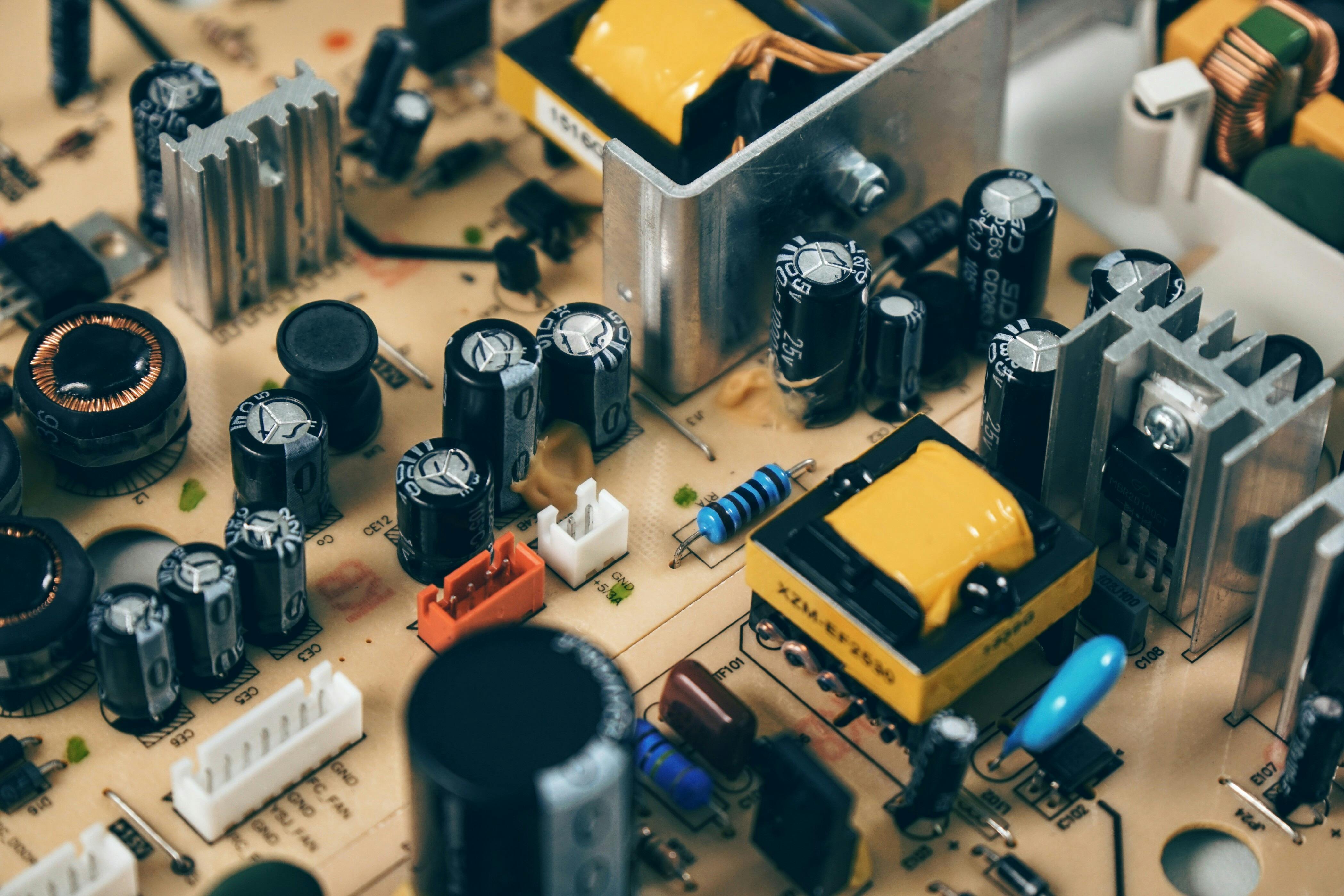
The AI industry has a memory problem. Not the kind where executives forget their promises about responsible development—the literal, physical memory that makes modern AI possible.
While venture capitalists and tech journalists obsess over GPU shortages and chip geopolitics, the real constraint strangling AI progress has been hiding in plain sight. High-bandwidth memory (HBM) has become the scarcest resource in the technology stack, and its ripple effects are reshaping everything from startup valuations to smartphone prices.
The numbers tell a brutal story. IEEE Spectrum reports that AI accelerators now consume such a disproportionate share of advanced packaging capacity and premium memory output that manufacturers are prioritising data centre margins over consumer electronics volumes. The result: tighter DRAM availability, rising spot prices, and what industry insiders are calling an "AI tax" on everything from laptops to phones.
Here's what the mainstream narrative gets wrong: it frames AI infrastructure as a compute problem. More GPUs, bigger clusters, faster chips. But memory is the fuel line, and fuel lines have a nasty habit of becoming bottlenecks when everyone's trying to fill up at once.
Memory isn't sexy. It doesn't get keynote demos or TED talks. But it's the difference between a model that trains in weeks versus months, between inference that costs pennies versus pounds. When memory constricts, model training timelines slip, cloud inference capacity gets rationed, and smaller labs feel it first because they can't negotiate long-term supply contracts.
The shift from "compute-bound" to "memory-bound" AI workloads represents a fundamental change in how the industry will develop. Tech Startups captured this perfectly: "If GPUs are the engines of the AI boom, memory is the fuel line. When that line constricts, model training timelines slip, cloud inference capacity gets rationed, and smaller labs and startups feel it first."
The memory crunch isn't an accident—it's the inevitable result of a supply chain that was never designed for AI's voracious appetite. Traditional memory manufacturing optimised for predictable demand curves: PCs, servers, mobile devices with relatively stable consumption patterns.
Then AI arrived and broke all the models. Training a large language model requires thousands of GPUs, each demanding premium HBM at volumes that dwarf traditional applications. The packaging facilities that attach memory to processors are running at capacity, creating cascading delays that ripple through the entire semiconductor ecosystem.
Samsung, SK Hynix, and Micron—the triumvirate that controls global memory production—find themselves in the unfamiliar position of being unable to meet demand despite charging premium prices. Reuters reports on mounting tensions between AI companies and memory suppliers, with some hyperscalers considering vertical integration to secure supply.
The geopolitics are getting messier too. With memory manufacturing concentrated in South Korea and Taiwan, supply chain resilience has become a national security issue. The US CHIPS Act allocates billions for domestic semiconductor production, but memory manufacturing is notoriously capital-intensive and takes years to scale.
This memory shortage is quietly redistributing power in the AI ecosystem. The obvious winners are memory manufacturers posting record profits. But the second-order effects matter more.
**Cloud hyperscalers are gaining relative advantage.** AWS, Google Cloud, and Microsoft Azure can absorb memory costs and secure long-term supply contracts in ways that smaller AI companies cannot. This creates a natural moat around large-scale AI infrastructure, potentially slowing the democratisation of AI capabilities.
**Model efficiency suddenly matters again.** Companies that can deliver equivalent performance with less memory have a fundamental cost advantage. This is driving renewed interest in model compression, quantisation, and architectural innovations that squeeze more intelligence per gigabyte.
**Edge AI is getting a boost.** When cloud inference becomes expensive due to memory constraints, running models locally becomes more attractive. Apple's M-series chips and Qualcomm's AI-focused processors benefit from this shift toward edge computing.
**Startups face a new financing reality.** Venture capitalists are waking up to infrastructure costs that were previously abstracts. Pitch decks now need to explain memory requirements, not just model capabilities. Companies that can't demonstrate memory efficiency may find funding harder to secure.
Constraints breed innovation, and the memory bottleneck is already sparking technical breakthroughs that wouldn't have emerged in a world of infinite bandwidth.
New architectures are emerging that decouple computation from memory requirements. TechCrunch highlights C2i's $15 million raise to redesign power delivery from "grid-to-GPU" for AI data centres. But power efficiency and memory efficiency are intertwined—chips that use memory more efficiently also tend to consume less power.
Software innovations are accelerating too. Gradient checkpointing, memory-efficient attention mechanisms, and novel training techniques that require less memory bandwidth are moving from academic papers to production systems. Companies like Anthropic and OpenAI are hiring talent specifically to optimise memory utilisation, not just model performance.
The memory crunch is also forcing a reckoning with AI model bloat. The trend toward ever-larger models may hit physical limits before it hits capability limits. This could trigger a shift toward more specialised, efficient models that solve specific problems rather than attempting general intelligence through brute-force scaling.
Here's where the AI memory war hits ordinary consumers: smartphone prices are rising partly because premium DRAM and flash storage are being diverted to AI applications.
The Verge reports on Samsung's Galaxy S26 "privacy display" features, which use on-device AI to selectively hide sensitive content from side angles. These ambient AI features require substantial local memory and processing power, adding to component costs.
The irony is that consumers are paying more for phones partly to subsidise the AI revolution they may not have asked for. Memory that could have made smartphones faster or more capable is instead being rationed to data centres training the next generation of AI models.
The memory shortage won't last forever, but its effects will reshape the industry permanently. New manufacturing capacity is coming online, but it takes 18-24 months to build memory fabrication facilities. By then, AI workloads may have evolved again, potentially creating new bottlenecks in packaging, testing, or integration.
More importantly, the memory crunch is accelerating the development of alternative computing paradigms. Neuromorphic chips that mimic brain-like processing, optical computing that uses light instead of electrons, and quantum-classical hybrid systems all promise to reduce dependence on traditional memory architectures.
The companies that navigate this transition successfully won't be those with the most GPUs—they'll be those that understand memory as a strategic resource and build their technology stacks accordingly.
If you're building an AI company, memory efficiency isn't an optimisation—it's an existential requirement. Your technical architecture needs to account for memory costs from day one, not bolt on efficiency as an afterthought.
If you're investing in AI, look beyond flashy demos to the underlying resource requirements. Companies that can deliver equivalent capabilities with 50% less memory have a sustainable competitive advantage that most VCs haven't priced in yet.
If you're a consumer, expect AI features to drive up device costs for the next 18 months. The memory shortage is a hidden tax on everyone's technology purchases, from phones to laptops to smart home devices.
The AI revolution is real, but it's constrained by physics as much as imagination. Memory is the new oil, and like oil, its scarcity is reshaping geopolitics, economics, and innovation. The question isn't whether AI will transform the world—it's which companies and countries will control the memory needed to make it happen.
The memory wars have begun. Choose your side carefully.