The AI Scare Trade Is the Best Career Event in a Decade. If You're Ready.
Every panicking company needs someone who can explain what AI actually does. That person just became the most valuable hire in every org chart.
Published 19 February 2026
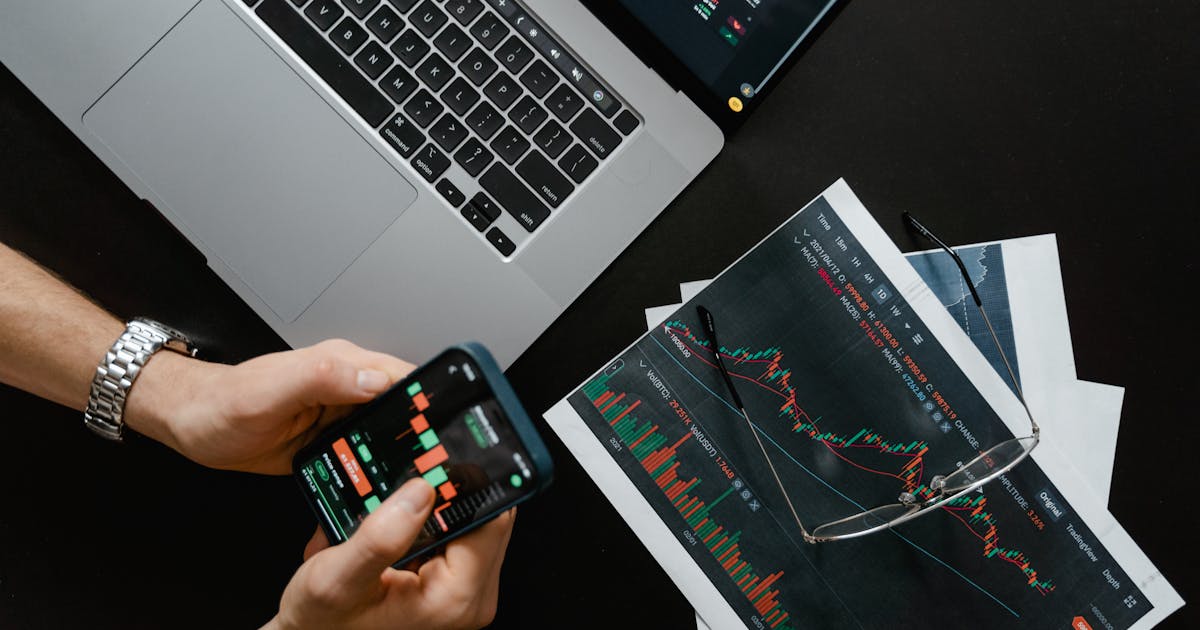
In the first two weeks of February 2026, the AI scare trade burned through eight sectors of the global economy. Software, private credit, insurance, wealth management, real estate services, logistics, drug distribution, commercial office space. Each sell-off was triggered by a different company with a different AI announcement. Each time, the market reaction was identical: dump first, analyse later.
Most of the coverage has focused on stock prices and investment implications. But for the vast majority of people — the ones who work in these industries, not trade them — the scare trade creates a different set of consequences entirely. And buried inside those consequences is the single largest career opportunity of the last decade.
Here's the mechanism you need to understand: the stock price drop and the job risk operate on different timescales, but they are now feeding each other in ways that create real consequences for people whose jobs AI cannot yet do.
When your company's stock drops 15% on AI fears, the technology did not change at all. But the organisational response will. Every company watching its peers get hammered in the scare trade is now scrambling competitively to announce an AI transformation initiative that changes the market narrative. And that scramble is about to restructure the org chart at thousands of businesses simultaneously.
The question you should be asking this week — if you work in any of the affected sectors, or frankly anywhere the AI narrative could hit — is where the AI budget for your company's inevitable "AI transformation" is coming from.
If the money is net new investment layered on top of existing capabilities, that's a company positioning for a genuine transition. They're adding AI as a capability multiplier, not replacing the capabilities that make the business work.
If the money is being extracted from the product team, the engineering organisation, or the people who actually understand the business — that company is optimising for an investor narrative, not a product story it can stand behind.
One of those strategies gives you a shot at competitive advantage if you execute the transition. The other gives you a press release, a headcount reduction, and regrets.
Watch what your company is building versus what it's buying. If leadership is saying "we can purchase an AI tool and reduce headcount for PMs," you should be asking pointed questions about the roadmap and polishing the CV simultaneously.
The scare trade is creating a sharp and accelerating split between two kinds of organisations.
The builders are companies that genuinely understand what it takes to integrate AI into their workflows. They're interested in learning what works. They're developing institutional knowledge about what the technology can and cannot do in their specific domain. They test, measure, iterate. It's slow. It's unglamorous. It compounds.
The buyers are companies in a panic. The CEO is reading LinkedIn posts about OpenAI and reacting by announcing a partnership with an AI vendor, producing a press release, and cutting some headcount to demonstrate "seriousness" to the board. The buyers get a logo on a slide deck. 12 months from now, they'll have a pile of expired vendor contracts and no institutional knowledge about what AI actually does in their business.
The gap between builders and buyers was growing anyway. The stock market sell-off made it visible to senior leadership, to the C-suite, to boards, at almost every company in America — and because of the prominence of the American stock market, boards all over the world are watching. Visibility like this is what turns a slow trend into an urgent capital reallocation.
The irony is savage. The buyers — the ones cutting headcount and signing vendor deals in a panic — are the companies that will be most vulnerable to actual AI disruption in two to three years. They'll have spent their transformation budget on optics rather than capability. Meanwhile, the builders will have developed a compounding advantage: each quarter's learning builds on the last, and as models improve, the integration work they've already done becomes more powerful without additional investment. AI compounds for organisations that use it deliberately. It evaporates for organisations that buy it as a narrative.
This is not an exaggeration: the AI scare trade is speeding up AI transformation by years at tens of thousands of businesses. And it is simultaneously creating the conditions for a massive transfer of career capital from one group of people to another.
Every company that just watched its sector get hammered — and the ones that are about to, because this is not done — is going to ask the same question internally: what can AI do in our business?
How can we apply it to our workflows? How can we get access to the data? How can we move on a timeline the board will accept? How do we get past a slide deck and into real capability?
Even the companies tempted to go with whiz-bang press releases typically do a little work to try and make them real. And in almost every organisation, the number of people who can answer that question with real specificity — rather than parroting vendor marketing or gesturing vaguely at "transformation" — is vanishingly small.
That gap is the single largest career opportunity in the market right now.
The role doesn't have a title yet. It won't get called "domain translator." But that's what it is. The person who can connect their specific domain expertise — legal, logistics, insurance, wealth management, ecommerce, whatever — with a grounded understanding of what AI can actually do today and what it cannot.
The technical people in most organisations understand the models but not the business. The business people understand the workflows but have never used the tools on a real-world problem — and are often scared of the terminal. The consultants understand neither; they understand frameworks. So the gap between "I've heard AI can do this" and "I've tested it, here's what it does for our specific business" is a canyon.
The scare trade just made crossing that canyon the most valuable thing anyone in the organisation can do.
Think about what happens in the next 90 days inside a company whose stock just got clipped 12% on AI fears. The CEO calls an emergency leadership meeting. The board demands an AI strategy. The chief strategy officer assembles a task force. Fear drives everything.
The person who can step into that room without fear becomes indispensable. Not because of their old title — not because they're a machine learning engineer or a product manager or in revenue operations — but because they can say something like this:
"I've been testing this. Here's what Claude can actually do with our contract review workflow. It handles about 70% of the initial analysis accurately. These are the conditional clauses it tends to miss. Here's where it cross-references correctly and where it doesn't. We need a human check at this specific stage. If we deploy it this way, we can cut overall review time by 40% and reduce outside counsel spend by roughly £200,000. Here's the implementation plan. Here's what it costs. Here's what it doesn't do. We're not going to overpromise to the board."
That person does not exist in most organisations right now. And the scare trade just made them the most sought-after hire in every company that's currently panicking.
The scare trade is simultaneously destroying career value for people who were coasting on process work and creating tremendous career upside for people who can combine domain expertise with AI fluency.
If your contribution to the business is synthesis — reading documents, summarising information, producing reports that aggregate other people's work — you are competing directly with a tool that does that faster and cheaper. The scare trade just made your CEO very aware of that fact.
If your contribution is judgement — knowing which information matters, understanding why the standard approach won't work for this client, seeing what the model is missing because it doesn't understand the regulatory history or the relationship dynamics — you are more valuable now than you were a month ago. The organisation just realised it cannot automate its way to that judgement, and it needs people who have it for the upcoming AI transition.
This split was growing before the scare trade. What changed is visibility. Senior leadership can now see it. And when leadership can see a split, capital follows — budgets get reallocated, roles get restructured, org charts get redrawn.
The career move here isn't "learn AI." That was 2024's advice. It's table stakes now, and table stakes don't get you promoted. The career move during a scare trade is more specific: be the person who has already tested AI against real workflows in your specific domain and can articulate the results with precision.
The concrete version differs depending on where you sit, but the principle is identical everywhere.
If you're in operations, it means you've already taken your team's most repetitive workflow and run it through an AI tool — not as a demo, but as an actual parallel process with real data, tracking where it works and where it breaks. You know the accuracy rate. You know the failure modes. You can present this in a meeting and it's not a guess.
If you're in legal, you've run 50 contracts through Claude's analysis and you know exactly which clause types it handles well (standard indemnification, boilerplate representations) and which it consistently misjudges (complex earn-out conditions, cross-default provisions). You've built a process around those findings.
If you're in ecommerce, you've tested AI against product data enrichment, customer service ticket classification, search relevance scoring, or Shopify theme customisation requests. You know which tasks get 90% accuracy out of the box and which need custom prompting, fine-tuning, or human review.
If you're in sales, you've used AI to pre-qualify leads, draft personalised outreach, or synthesise account intelligence from LinkedIn, earnings calls, and news — and you know which inputs produce useful outputs and which produce confident-sounding hallucinations that would embarrass you in a meeting.
If you're in finance, you've run AI against financial reporting analysis, variance explanations, and board deck preparation. You know it can synthesise 50 pages of quarterly data into a coherent narrative in seconds but consistently misinterprets one-off charges and non-standard accounting treatments. You've built a review checklist around those specific failure modes.
In every case, the pattern is the same: you've done the work. You have data. You can articulate both the capability and the limitations with precision, not with hand-waving. That specificity is what separates you from the 95% of the organisation that is either ignoring AI entirely or gesturing at it without ever having used it on a real problem. And it's what makes you the person who gets pulled into the emergency strategy meeting rather than the person whose role gets flagged in the headcount review.
The scare trade is a transfer of career capital. It moves value from the people who treated AI as somebody else's problem to the people who have been investing in understanding it. The stock drops are just the visible part. The org chart reshuffling is the part that determines your next five years.
Six months ago, if you were the person who understood AI in your company's domain, that was a good career differentiator. You were setting yourself up well for the future. Today, it's the difference between being on the task force and being on the layoff list. That's not hyperbole — it's the direct consequence of a market that just made AI strategy an existential board-level priority at every company it touched.
Consider the Cursor example from the software sector. Cursor hit $300 million in annualised revenue faster than almost any software product in history. It's well past $500 million now. The companies that had people internally who understood what Cursor could and couldn't do — the actual failure modes, the real productivity gains, the specific workflows where it excels versus where it hallucinates — those companies made informed decisions. The companies that only had LinkedIn posts and vendor pitches to go on made panic decisions. The difference in organisational outcomes will be visible for years.
The people most at risk in this moment are not the ones whose jobs AI can replace today. They're the ones in any cost centre at companies whose stocks just dropped on AI fears. A corporate operations analyst at a logistics company that just fell 16% is more immediately at risk than an identical analyst at a manufacturing company. Not because the AI threat is different or because AI can do that job, but because the stock pressure is different. The scare trade is a blunt instrument, and blunt instruments create collateral damage.
But the rosier side is equally extreme. Every company panicking about AI is about to spend heavily on AI capabilities. That spending creates roles, budgets, initiatives, and career paths that didn't exist months ago. The person who spent the last year building genuine AI fluency — not asking ChatGPT to write emails, but understanding how to integrate AI into business workflows — is now positioned to bridge the gap between what the C-suite is being told by vendors and what the technology can actually deliver.
That person just became the most valuable hire in every org chart being redrawn. And there are a lot of org charts being redrawn right now.
AI disruption is real. It's not evenly distributed. And the market's current method of pricing it — sector-wide panic triggered by press releases from companies with $6 million market caps — is creating a mispricing so severe that it constitutes both a historic investment opportunity and a historic reallocation of organisational attention.
The question is whether you're positioned on the right side of that reallocation.
The career advice industry has been saying "learn AI" for two years. That's over. Knowing what ChatGPT is and using it for email drafts is not a differentiator any more than knowing what Excel is was a differentiator in 2005. The differentiator now is domain-specific AI fluency — the ability to connect what the models can do with what your specific business needs, and to articulate the gap between those two things with enough precision that leadership trusts you to bridge it.
The scare trade compressed the timeline for that transition from years to months. The companies are panicking now. The budgets are being allocated now. The task forces are being assembled now. The org charts are being redrawn now.
The window to get positioned is narrower than it was last month. And it is closing fast.