Luxury Cars, Cash Envelopes, and the Most Expensive AI User Acquisition Campaign in History
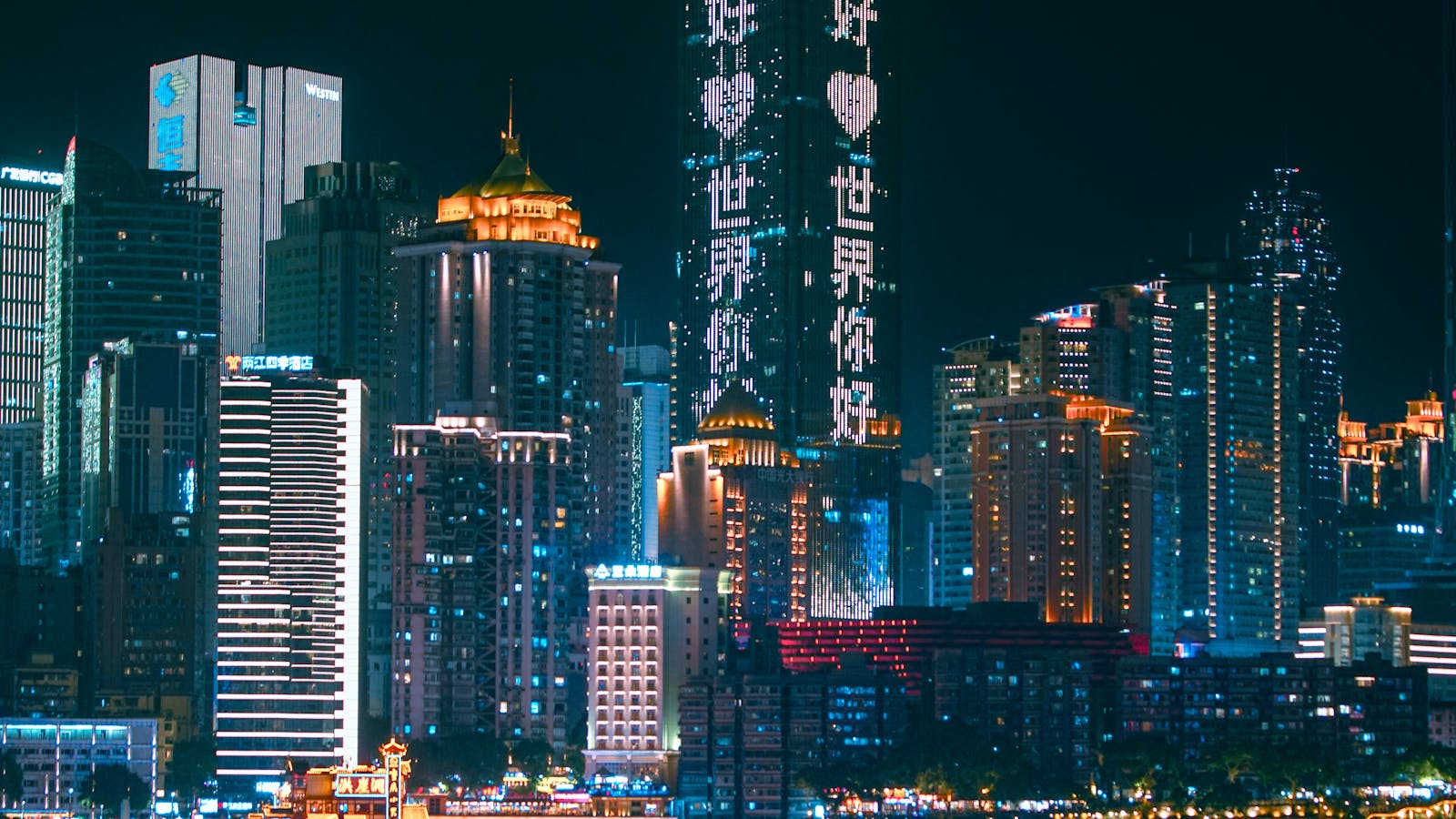
While Silicon Valley's AI companies were busy arguing about safety frameworks and publishing research papers this February, something far more visceral was happening 10,000 kilometres east. China's largest technology companies launched what local media is calling "The Spring Festival AI War" — a multibillion-yuan spending blitz designed to get hundreds of millions of Chinese consumers to download, use, and become dependent on their AI chatbots during the Lunar New Year holiday.
ByteDance, the company behind TikTok, spent an undisclosed fortune securing the prime partnership slot for China's Spring Festival Gala — the most-watched television broadcast on the planet, with over 700 million viewers. Through its Doubao AI chatbot, ByteDance gave away 100,000 prizes during the gala, including luxury cars and digital red envelopes worth up to CNY 8,888 (about £1,000). Alibaba committed CNY 3 billion — roughly £340 million — to a coupon campaign for its Qwen AI app. Tencent allocated CNY 1 billion (£115 million) to promote its Yuanbao chatbot. Baidu threw in another CNY 500 million (£57 million) for its Ernie model.
Add it all up and you get somewhere north of £500 million in direct consumer spending over a two-week period. For AI chatbots. During a holiday.
This is not normal behaviour. Not even by Chinese tech standards, where aggressive subsidies are practically a cultural tradition. The sheer concentration of spending — more than half a billion pounds in direct consumer incentives for AI products during a single holiday period — represents something new. And understanding why it's happening — and what it means for Western businesses, technology strategy, and geopolitics — matters far more than most people realise.
The DeepSeek Anniversary: One Year On From the Shock
To understand the Spring Festival AI War, you need to rewind exactly one year. In January 2025, a relatively unknown Chinese startup called DeepSeek released its R1 model, which delivered performance comparable to OpenAI's best offerings at a fraction of the cost. The "DeepSeek moment" wiped hundreds of billions of dollars off US tech stocks in a single day and fundamentally changed how the world thought about China's AI capabilities.
DeepSeek's success was built on an open-source strategy, ruthless cost efficiency, and a willingness to share its methods publicly. It proved that you didn't need $100 billion in GPU clusters to build competitive AI. You needed smart engineering, efficient training methods, and the willingness to give your work away for free.
The established Chinese tech giants — ByteDance, Alibaba, Tencent, Baidu — were caught completely flat-footed. DeepSeek's app rocketed to the top of download charts globally during the 2025 Spring Festival holiday, stealing the cultural moment that China's tech incumbents had assumed was theirs by right.
They swore it would never happen again. And this year, they backed that promise with their wallets.
The Numbers Behind the Blitz
The scale of what just happened is difficult to overstate. Here's what the major players have been doing:
ByteDance (Doubao): Already China's most popular AI chatbot with 155 million weekly active users, ByteDance launched Doubao 2.0 on Valentine's Day — strategically timed for maximum attention before the holiday began. The new model focuses on what ByteDance calls the "Agent Era," designed not just to answer questions but to execute complex, multi-step tasks autonomously. ByteDance claims the Pro version matches GPT-5.2 and Gemini 3 Pro in benchmarks, at roughly one-tenth the cost per token. They also dropped Seedance 2.0, a video generation model that produced an AI-generated fight scene between Tom Cruise and Brad Pitt so convincing that Elon Musk commented "It's happening fast."
Alibaba (Qwen): Alibaba's CNY 3 billion subsidy campaign wasn't just throwing money at downloads. It integrated shopping directly into the Qwen chatbot, allowing users to buy food and drinks through the AI during the holiday rush. The result? Qwen's daily active users surged from 7 million to 58 million in a single week — an 8x increase that crashed the app and forced Alibaba to "urgently add resources" to handle the load. Alibaba is also reportedly considering increasing its AI infrastructure investment from CNY 380 billion to CNY 480 billion (roughly £55 billion to £69 billion) over the next three years.
Tencent (Yuanbao): The late entrant to China's AI race, Tencent recruited 27-year-old former OpenAI researcher Yao Shunyu, who reportedly diagnosed that Tencent's Hunyuan model had been gaming benchmarks rather than building genuine capability. Tencent committed CNY 1 billion for Lunar New Year promotions and is integrating Yuanbao deeper into its WeChat ecosystem — which serves over 1 billion users. When Tencent decides to push AI through WeChat, it doesn't need to acquire users. It already has them.
The startups: Zhipu AI (also known as Z.ai) released GLM-5 to compete with Anthropic's Claude on coding tasks. MiniMax launched its M2.5 model. Both companies recently went public in Hong Kong, raising $560 million and $620 million respectively, with share prices surging. DeepSeek itself is reportedly preparing to release its V4 model and Alibaba is expected to unveil Qwen 3.5, featuring improved mathematical reasoning and coding capabilities.
Why This Looks Nothing Like Silicon Valley's AI Race
There's a fundamental difference between how China and America are competing in AI, and the Spring Festival War makes it impossible to ignore.
In the United States, AI competition is primarily about enterprise contracts, developer platforms, and API pricing. OpenAI sells to businesses. Anthropic sells to businesses. Google sells to businesses. The consumer products — ChatGPT, Gemini, Claude — exist as showcases and data flywheels, but the money comes from B2B deals.
In China, the war is being fought on the consumer front line. These companies are spending billions to get ordinary people — factory workers heading home for the holidays, grandparents sending red envelopes, teenagers burning through social media — to use AI chatbots as daily utilities. They're embedding AI into shopping, entertainment, messaging, and payments. Not as a premium product. As a subsidised commodity.
This pattern should look familiar. As CNBC noted, "The cash incentives and cutthroat competition are reminiscent of the early stages in other industries Beijing aimed to dominate globally, like steel, solar panels, and EVs, that eventually led to pushback from its trading partners for flooding world markets with unfairly cheap products." In 2015, similar Lunar New Year promotions for Tencent's WeChat Pay led to the explosive growth of mobile payments that now defines Chinese daily life.
Charlie Dai, principal analyst at Forrester, put it bluntly: "They are in a high-stakes race to capture users and build developer ecosystems before rivals lock in market dominance. The issue is that profitability and sustainable business models remain unclear, for every major player in the global market."
The Chip Paradox: Constrained but Accelerating
Here is the part that should make Western strategists uncomfortable. All of this is happening while China remains cut off from the most advanced semiconductor supply chains.
At a conference at Tsinghua University in January, senior AI executives from Tencent, Alibaba, and Zhipu AI gathered to assess the industry. The consensus was cautiously optimistic — but the chip problem remains real. Huawei, leading China's chip charge, has said it will need almost another two years to make chips that perform as well as Nvidia's current offerings. The Chinese government has spent more than $150 billion on domestic semiconductor development, but Chinese chip makers still produce a fraction of the advanced chips made by foreign firms.
"Even the national champion is fighting an uphill battle," said Xiaomeng Lu, a director with Eurasia Group, a political consultancy in Washington.
But here's the twist: US export controls haven't stopped China's AI industry. They've redirected it. Unable to buy the best Nvidia GPUs, Chinese companies have become world leaders in training efficiency. DeepSeek proved this a year ago. Now the entire Chinese AI ecosystem has absorbed that lesson. Alibaba is reportedly buying consumer-grade RTX 4090 graphics cards "in large quantities" to build inference clusters. When you can't buy the supercar, you learn to make the family saloon go very, very fast.
Justin Lin, technical lead for Alibaba's Qwen models, assessed that the chances of a Chinese AI firm overtaking US frontrunners in the next three to five years are "below 20 percent." But that assessment comes with a critical caveat: the gap may not matter as much as people think. If Chinese models deliver 90% of the capability at 10% of the cost, that's not a handicap. That's a different competitive strategy entirely.
Open Source as Geopolitical Strategy
The most strategically significant development isn't any single model or any single spending campaign. It's the wholesale adoption of open source as China's AI strategy.
Since the DeepSeek shock, open-sourcing has become what Lian Jye Su, chief analyst at Omdia, called "an industry consensus in China." The strategy serves multiple purposes simultaneously. It reduces costs for developers and enterprises. It builds global communities around Chinese models. It reduces exposure to geopolitical risk — if your model is already running on servers worldwide, export controls can't claw it back.
Alibaba's Qwen overtook Meta's Llama last September as the most-downloaded open model on Hugging Face. Even American companies like Airbnb have adopted it for AI-powered customer service. In December, Meta announced it would acquire Manus, an AI agent firm founded in China and later relocated to Singapore — though Beijing's regulatory review process could still unwind the deal.
For Western businesses, this creates an uncomfortable reality. The best value AI models are increasingly coming from China. They're free. They're capable. And using them means building your technology stack on foundations controlled by companies operating under Beijing's oversight.
And the government is actively pushing in the same direction. Premier Li Qiang recently chaired a government study session specifically on AI, calling for stronger coordination of data, computing power, and internet infrastructure. He said China should accelerate the "large-scale commercial application" of artificial intelligence. This wasn't a throwaway comment at a press conference. It was a formal policy session at the highest level of Chinese government.
When Beijing's AI policy aligns with the commercial incentives of China's largest private companies, the result is something that neither purely state-directed industrial policy nor purely market-driven innovation can produce. It's a hybrid model where government direction, massive private capital, and intense commercial competition all push in the same direction simultaneously.
The new AI billionaires Bloomberg recently profiled — from MetaX Integrated Circuits to Moore Threads Technology — have amassed a collective $100.5 billion in wealth, rivalling Bill Gates. Their rise, Bloomberg noted, "underscores how wealth creation in China is now entwined with the state's push for technological independence." This isn't a handful of founders getting rich on hype. It's a structural shift in how China creates and concentrates wealth — and AI is now the primary vehicle.
What This Means For Western Businesses (and Why You Should Care)
If you run a business that uses AI — which, increasingly, means if you run a business — the Spring Festival AI War has three implications you cannot afford to ignore.
First, AI costs are heading to zero. When ByteDance offers frontier-class AI at 90% cheaper than OpenAI, and Alibaba subsidises usage to gain market share, it creates relentless downward pressure on global pricing. OpenAI, Anthropic, and Google will have to respond. This is good for buyers in the short term, but it also means the AI market is heading toward a commodity dynamic faster than most forecasts predicted.
Second, the "agent era" is being defined in China first. Doubao 2.0's focus on autonomous task completion — not just answering questions, but executing multi-step workflows — represents where the entire industry is heading. While Western companies debate agent frameworks and safety protocols, Chinese companies are shipping agent products to 155 million weekly users. The practical knowledge gained from deploying agents to that many users will be extraordinarily difficult to replicate in a market with 10x fewer consumers touching the technology daily.
Third, supply chain dependencies are being rewritten. Every Western company using Chinese open-source models — and there are more of them than anyone publicly admits — is building on foundations that exist at Beijing's pleasure. This isn't paranoia. It's the same concern that drove the TikTok divestiture saga, applied to a far more consequential technology layer. The models your developers are downloading from Hugging Face today may become a geopolitical liability tomorrow.
The West Might Be Playing the Wrong Game Entirely
Here's the part nobody in Silicon Valley wants to hear. The metrics that Western AI companies optimise for — benchmark scores, parameter counts, training compute — may be the wrong metrics entirely.
China's AI companies are optimising for something different: utility per yuan. Cost per task. Users per dollar spent. Integration depth with existing services. When Alibaba builds AI into its e-commerce checkout flow and gets 58 million daily users in a week, it's generating more practical AI usage data than a thousand enterprise pilot programmes.
Tang Jie, founder of Zhipu AI, acknowledged that the performance gap between Chinese and US models "may be widening." But performance gaps measured on academic benchmarks don't necessarily translate to gaps in commercial value. A model that's 80% as capable but costs 10% as much and is used by 10x as many people generates vastly more real-world training data and practical insight than a model sitting behind a $200/month API subscription.
The uncomfortable truth is that China may be building the larger, more resilient AI ecosystem — not because it has better models, but because it has a better distribution strategy.
DeepSeek's V4 model is expected within weeks. Alibaba's Qwen 3.5 is reportedly imminent. ByteDance has established Doubao as the undisputed consumer AI leader in China with 155 million weekly active users — more than ChatGPT's reported global figures.
Two Chinese AI startups have just raised over $1 billion in Hong Kong IPOs. The government is explicitly backing accelerated commercialisation. And all of this is happening under the shadow of US chip export controls that were supposed to slow China's AI progress by years.
The Spring Festival AI War isn't a holiday marketing stunt. It's the opening campaign of a consumer AI distribution war that will define the next decade of technology competition between the world's two superpowers. Western businesses that dismiss it as irrelevant Chinese domestic competition are making the same mistake that Western manufacturers made when they dismissed Chinese solar panels, Chinese EVs, and Chinese smartphones as inferior copies.
They weren't inferior copies then. And Chinese AI isn't an inferior copy now. It's a different strategy — one optimised for massive distribution, relentless speed, and aggressive cost reduction — and if history is any guide, it's the strategy that tends to win.
The Spring Festival AI War of 2026 may be remembered as the moment China's AI industry shifted from catching up to defining the terms of competition. Not by building better models. By building better distribution. By making AI free, ubiquitous, and indispensable to hundreds of millions of people before the West had finished debating whether ordinary consumers even wanted it.
The answer, it turns out, is yes. They wanted it enough to crash Alibaba's servers.